
There’s a quiet revolution happening in personalized health, and it starts with something most people have never heard of: methylation pathways. Gary Brecka, a former life insurance underwriter turned longevity advocate, built his career analyzing health data to price risk. What he found wasn’t just alarming — it was actionable.
People were seeing multiple doctors, getting conflicting prescriptions that could be lethal, with no one looking at the full picture. Brecka couldn’t legally intervene. So he left and built a business around holistic, genetics-based health optimization.
Here’s how it works. Your body has methylation pathways; think of them as the machinery that converts food into usable fuel. These pathways control detoxification, inflammation, hormone processing, DNA repair. Brecka tests five key genes (MTHFR, MTR, MTRR, COMT, CBS) to see where your system has bottlenecks. From there, he prescribes personalized supplements instead of the guesswork most people rely on.
That’s the promise: AI-powered, hyper-personalized medicine that could extend lifespans and eliminate chronic conditions. The technology is moving fast. Within 5-10 years, custom DNA audits paired with AI-driven treatment plans could become standard care.
But there’s a catch — a big one.
The Privacy Problem No One Wants to Talk About
When you upload your genetic code to analyze it, you’re handing over the most intimate data you possess. Companies like 23andMe have been hacked. Their databases have been acquired by unknown parties. What happens when your biometric blueprint is sitting on someone else’s server?
This isn’t paranoia. It’s precedent. Health insurers, employers, governments, anyone with access could use that data in ways you never consented to. Investors should be watching how privacy regulations evolve here, because the business models of companies in this space depend on trust. One major breach or misuse scandal could collapse valuations overnight.
The flip side? There’s enormous upside for privacy-first solutions. Encrypted, local AI models that let you interrogate your own genetic data without uploading it anywhere could be a massive market opportunity. Right now, that product barely exists.
Doctors Are Already Using ChatGPT — They Just Aren’t Telling You
Here’s something that should make you sit up: doctors are increasingly typing patient symptoms into ChatGPT mid-appointment and regurgitating the output. Why? Because AI can cross-reference a vastly larger dataset than any single physician’s training. It’s faster. It’s broader. And patients often don’t even know it’s happening.
This isn’t the future. It’s happening now.
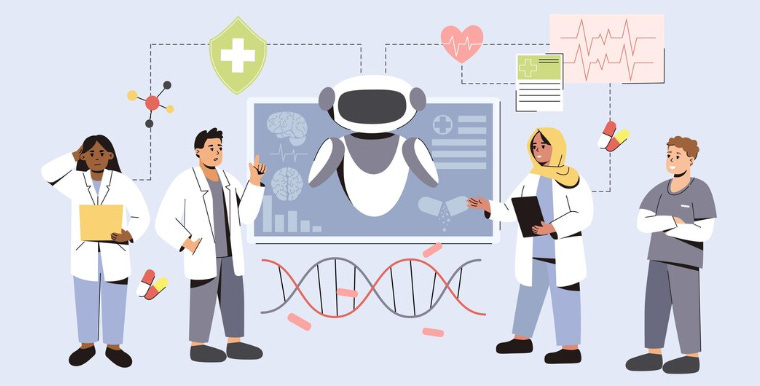
But here’s where it gets uncomfortable. When doctors rely on AI for quick answers instead of deep analysis, we’re not just changing medicine — we’re changing what “expertise” even means. And we’re generating mountains of AI-created medical advice without checking if it’s actually correct.
On one of the podcast, a presenter described it perfectly: “We’re pushing the easy button, but the data we’re creating isn’t necessarily human-generated anymore.” Google reports that 70-90% of code being written today comes from AI, not humans. The same trend is creeping into medicine, education, law — everywhere.
Investors need to understand this shift. The companies winning in AI-driven healthcare won’t just be the ones with the best models. They’ll be the ones that solve for trust, accuracy, and accountability when things go wrong.
