
The Gold Market Primer: Market Size and Structure by the World Gold Council offers a clear, data-driven view of how large, liquid and structurally unique the gold market is.
At its core, the report argues that gold combines scarcity with scale. It describes the market as “a US$31tn market”, built on nearly 220,000 tonnes of above-ground stock accumulated over centuries. This stock is not just large—it is permanent. As the report notes, gold is “virtually indestructible”, meaning past production continues to influence current supply and price dynamics. (World Gold Council)
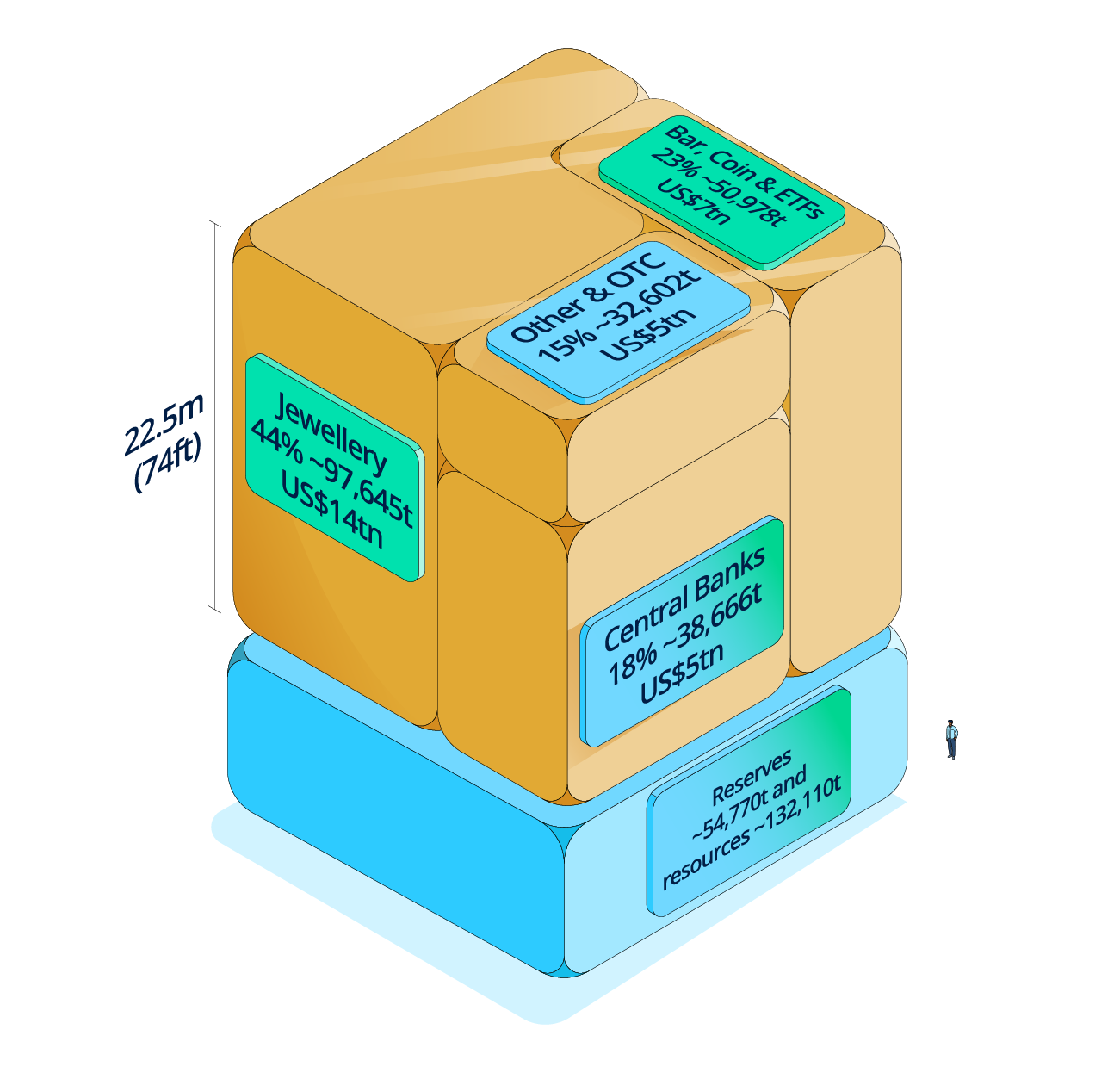
Source: WGC Report
A key insight from the report is the size of the investable universe. It states that “the total investible gold market is worth US$15tn”, of which physical gold accounts for the bulk and derivatives form a smaller but important layer. This distinction matters: physical holdings anchor the system, while derivatives enhance liquidity and price discovery. (World Gold Council)
Liquidity is another defining feature. The report highlights “institutional-grade liquidity”, supported by deep over-the-counter markets and active futures exchanges. This allows gold to absorb large institutional flows without major price disruption—an attribute few asset classes can match. (World Gold Council)
Despite this scale, the report emphasises that gold remains underrepresented in portfolios. It calls gold “an under-owned strategic investment”, noting that it accounts for only a small share of global financial assets. This gap, implicitly, is where future demand could emerge. (World Gold Council)
Finally, the report frames gold’s resilience through its structure. It points to “diverse structure supports stability”, where demand spans jewellery, investment and central banks, while supply comes from both mining and recycling. (World Gold Council)
The conclusion is straightforward: gold is not just a legacy asset. It is a large, liquid and under-allocated market with structural features that allow it to remain relevant across economic cycles.
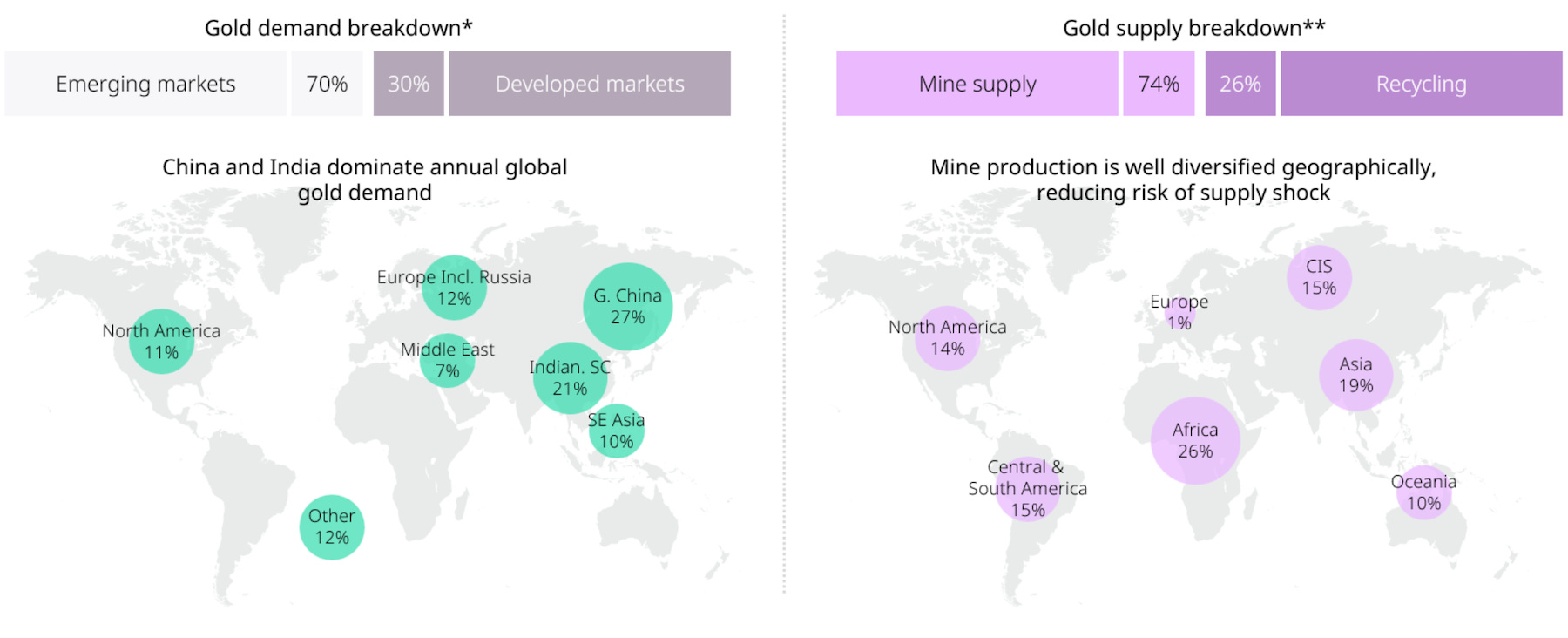
Source: WGC Report