For investors, short-term market movements often dominate headlines, but history tells a different story. The Deutsche Bank Research Institute’s The Ultimate Guide to Long-Term Investing argues that wealth creation has been driven less by timing the market than by remaining invested through decades of economic cycles. Drawing on data from 56 economies—some extending back more than two centuries—the study examines how equities, bonds, gold, and cash have performed across changing macroeconomic environments.
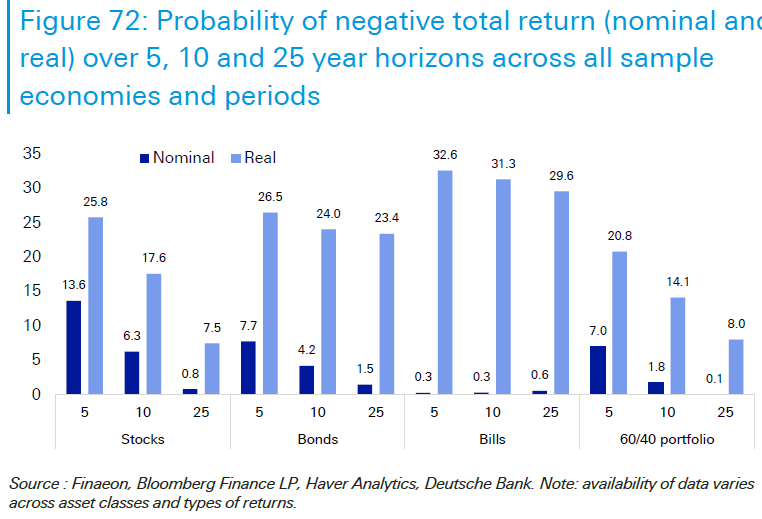
The report’s central conclusion is remarkably consistent with financial history: productive assets have significantly outperformed stores of value over long horizons. Across the median 200-year dataset, global inflation-adjusted returns averaged approximately 4.9% annually for equities and 4.2% for a traditional 60/40 portfolio, compared with 2.6% for government bonds and just 0.4% for gold. Cash held without earning interest generated negative real returns over time, illustrating how inflation steadily erodes purchasing power.
Economic growth forms the foundation of these returns. According to the study, nominal GDP growth ultimately drives corporate earnings, household incomes, government revenues, and therefore asset prices. However, the authors caution that developed economies are entering a period of structurally slower nominal and real GDP growth, reflecting weaker productivity gains and increasingly unfavourable demographic trends. Many countries are projected to experience shrinking working-age populations over the coming decades, potentially reducing future economic expansion unless offset by higher productivity or technological advances such as artificial intelligence.
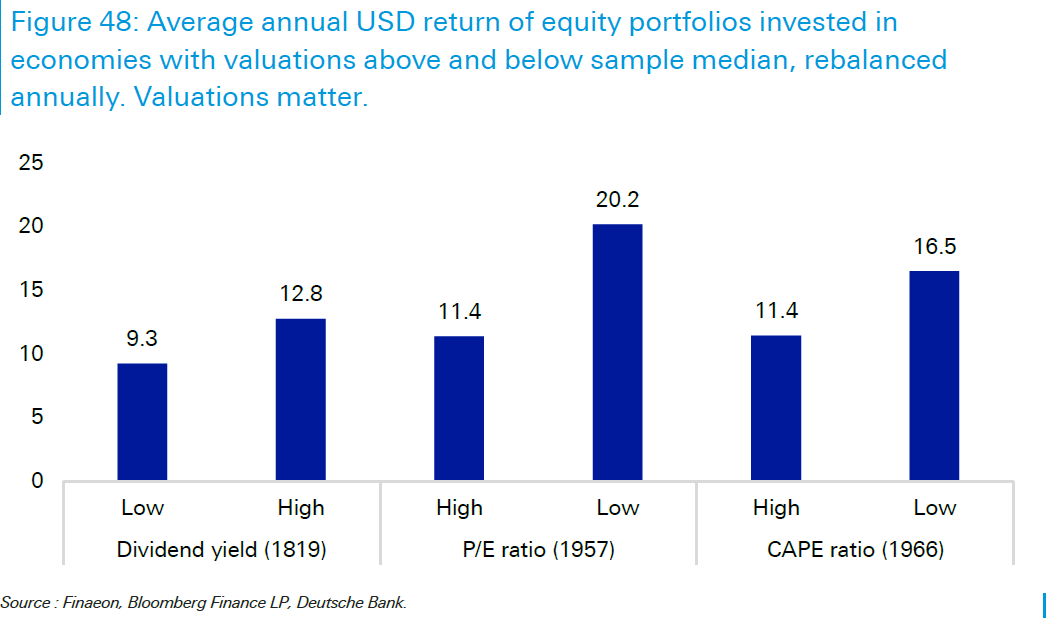
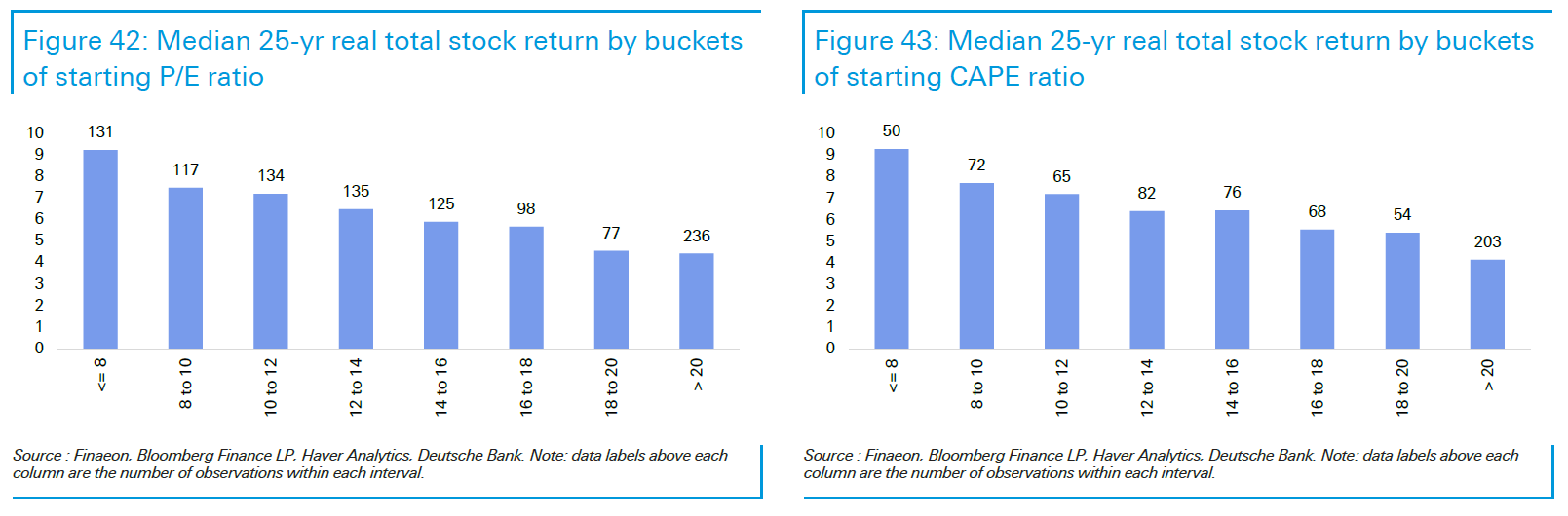
Perhaps the report’s most practical insight concerns valuation. Across decades and multiple countries, starting valuations consistently proved to be one of the strongest predictors of long-term investment returns. Markets trading at lower price-to-earnings or CAPE ratios historically delivered substantially stronger returns than expensive markets. Similarly, government bonds purchased when yields were relatively high generated better long-term outcomes than bonds bought during periods of exceptionally low interest rates. Rather than attempting to forecast economic cycles, investors may improve long-term results simply by paying attention to the price they pay for assets.
The study also challenges several common assumptions. Gold, despite its impressive performance in the twenty-first century, has delivered relatively modest real returns over the past two centuries. Likewise, the negative correlation between equities and bonds that investors became accustomed to after the Global Financial Crisis appears to have been the exception rather than the historical norm, particularly in higher-inflation environments.
Ultimately, the report reinforces a timeless lesson. Long-term investing is not merely about choosing the right asset class but about combining patience, sensible diversification, and disciplined valuation. Markets will continue to fluctuate, economies will evolve, and policy regimes will change. Yet over centuries of evidence, investors who remained invested in productive assets while maintaining reasonable entry valuations have consistently been rewarded. That enduring relationship between economic growth, valuation, and compounding remains one of the strongest foundations for successful long-term investing.
Learning: Asset allocation is the key criteria to wealth generation, a single asset class runs different kinds of risk.
Source: www.dbresearch.com/research-institute
.