
For decades, investors have been taught that value stocks reliably outperform growth over time. The MEKETA Equity Style Report questions whether that belief still holds in the real world. While academic datasets such as Fama-French show a long-term value premium going back to 1926, those results rely heavily on small and micro-cap stocks that are largely uninvestable today. In contrast, investable indices such as the Russell 3000 show that growth has outperformed value since 1979, with the gap widening sharply over the past 15 years.
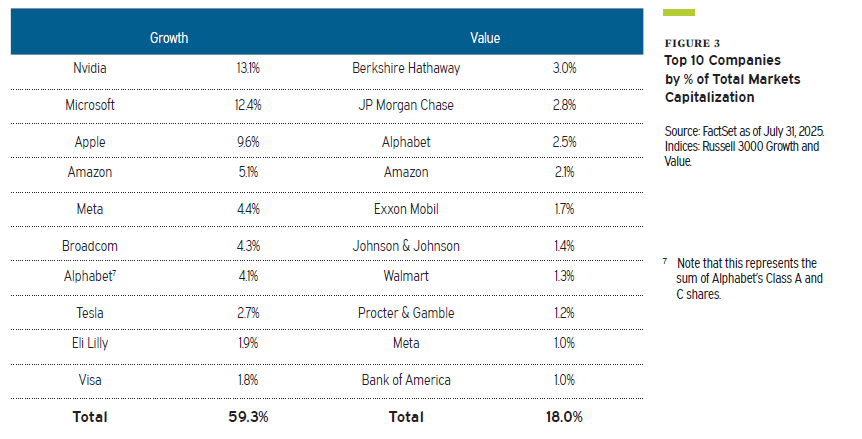
One of the defining features of the recent growth cycle has been extreme market concentration. Since 2007, the top ten stocks in the Russell 3000 Growth Index have risen from 15.7% to 59.3% of the index, driven primarily by the “Magnificent Seven” technology giants. Value indices, by contrast, have become more diversified over time. This concentration has reshaped index behaviour, risk, and return outcomes.
Style leadership, however, has never been permanent. MEKETA shows that value and growth rotate in long, uneven cycles that can last a decade or more. The most recent growth-led cycle, from mid-2007 to late-2020, was among the longest on record, fuelled by low interest rates, digitalisation, and the rise of intangible assets such as software and R&D. Importantly, there are no reliable indicators that consistently signal when leadership will change.
From a risk perspective, growth stocks exhibit higher volatility and greater sensitivity to market swings. Growth captures more upside during rallies but also more downside during corrections, reflected in a higher beta relative to value. Historical crises reinforce that outcomes depend on context: growth held up better during the Global Financial Crisis, while value proved more resilient during the dot-com crash.
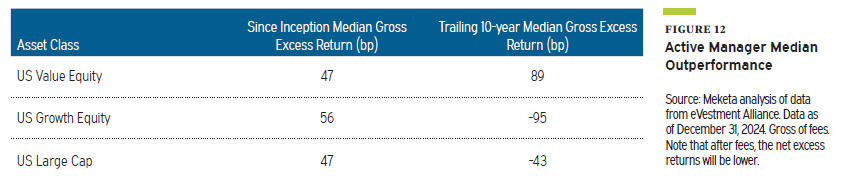
Implementation matters as much as style choice. Over the past decade, value managers have delivered positive excess returns on average, while growth managers have struggled, partly because concentrated growth indices are harder to beat. Yet dispersion within both styles remains wide, making manager selection critical rather than style timing.
The report also highlights a sharp geographic contrast. Outside the US, value has continued to outperform growth across developed and emerging markets for decades, challenging the assumption that value is structurally “dead” everywhere.
Finally, while current valuations appear elevated, MEKETA argues this is not a repeat of 2000. Today’s leading growth companies generate real earnings and cash flows, unlike the speculative firms of the dot-com era. The conclusion is clear: investors should abandon permanent style biases and instead build portfolios resilient to long, unpredictable cycles of value and growth leadership.
To read the full report click here.

Source: freepik